

They do things differently in Cuyahoga County
Plus, Neo-Nazi supported gubernatorial candidate Casey Putsch goes crying to the mods.


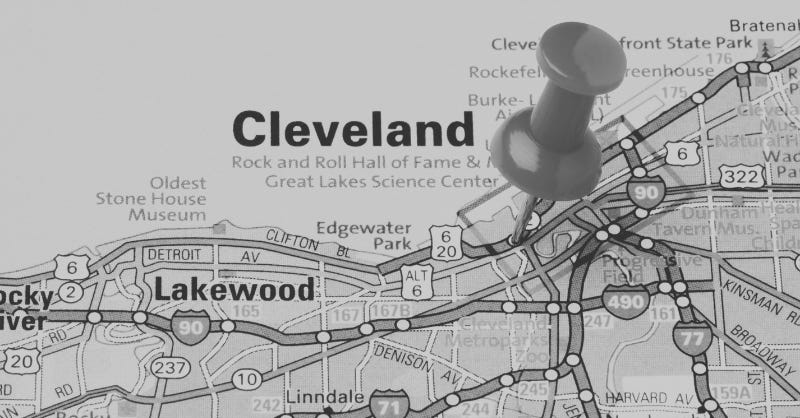
During the previous article in an overall series on Cuyahoga County politics, we examined voter turnout metrics specifically across the city of Cleveland from 2018 to 2022, 2019 to 2023, and 2020 to 2024.
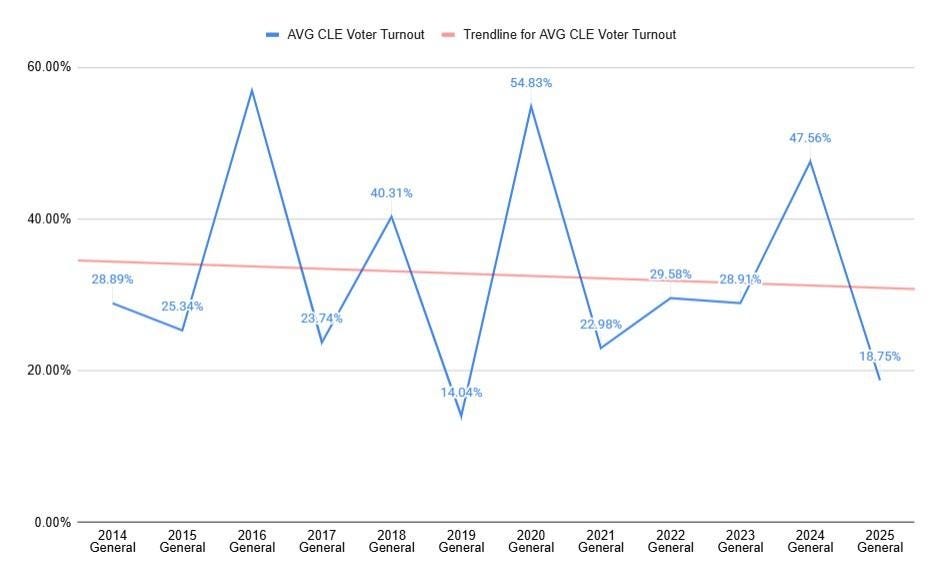
Unfortunately, average Cleveland voter turnout has been trending downward for quite some time. The 2016 Presidential Election marked an 11-year high in Cleveland voter turnout, at just under 57%.
Average Cleveland Voter Turnout, 2014 - 2025
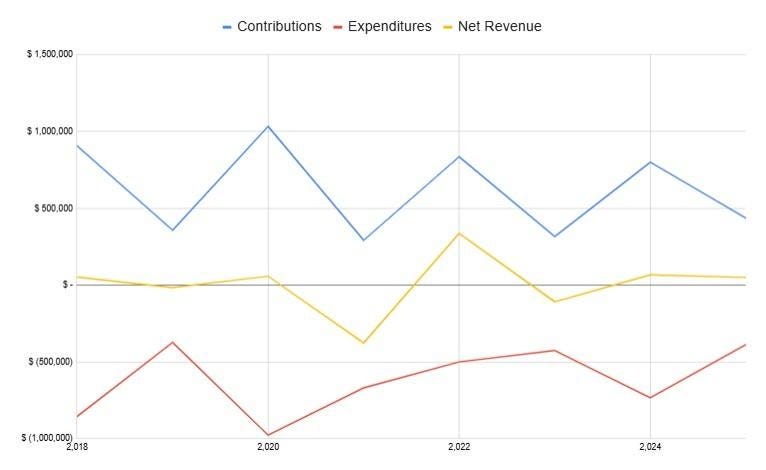
This analysis dives into the contribution and expenditure data publicly reported by the Cuyahoga County Democratic Party (CCDP), made available through the Cuyahoga County Board of Elections (if a report isn’t available in the search feature, you can just ask the staff for a copy).
Examining every report from 2018 to 2025, specifically the contributions and expenditures the committee received or spent during that time frame and are legally required to itemize and report, the Party has reported a profit in five out of eight years—three of which occurred within the last four years of the elected leadership of the current Chairman, David Brock.
CCDP’s Contribution & Expenditure Totals, 2018 - 2025


If we take a closer look at the contributions, there are generally five categories of revenue that the Party receives, all of which are relatively self-explanatory.
Contribution Totals by Revenue Type, 2018 - 2025
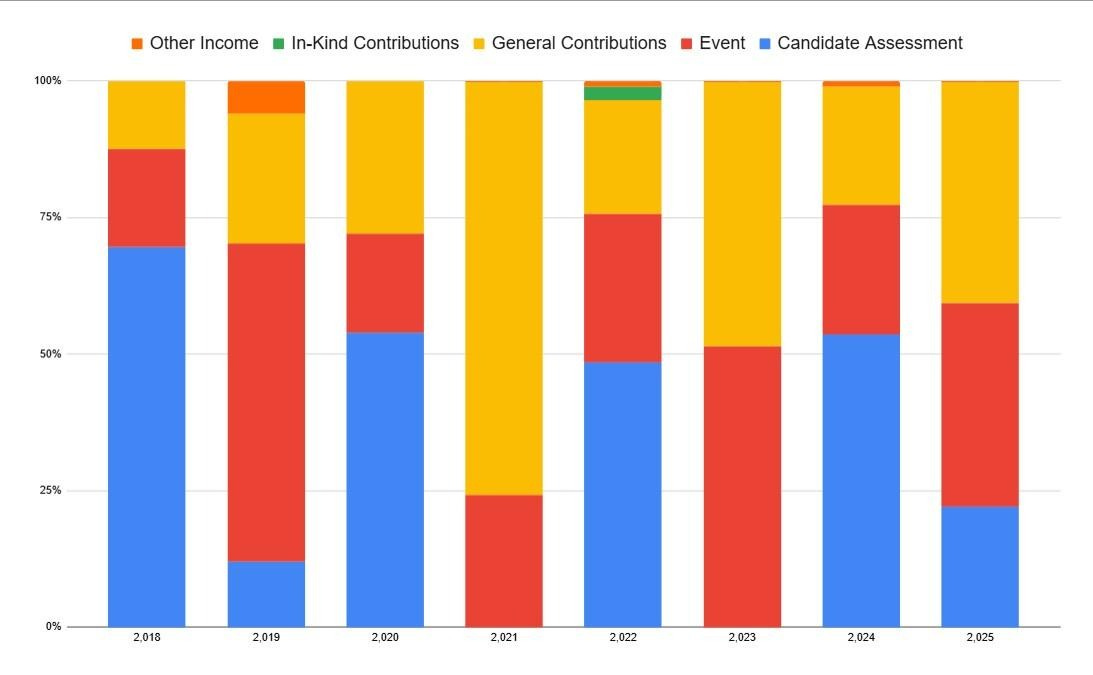
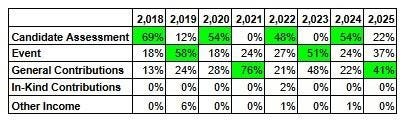
The ‘Candidate Assessment’ category refers to what the candidates who are endorsed by the CCDP Executive Committee pay in order to be featured on the Party’s Sample Ballot, or essentially the Democratic candidates that received 60% or more votes from the district’s members that were either elected by its Central Committee or appointed by the Ward/City Leader and chairman.
For the past eight years, the Candidate Assessment fee paid by endorsed candidates has been the primary revenue source in half of the election years.
Cleveland 2025 Democratic Sample Ballot
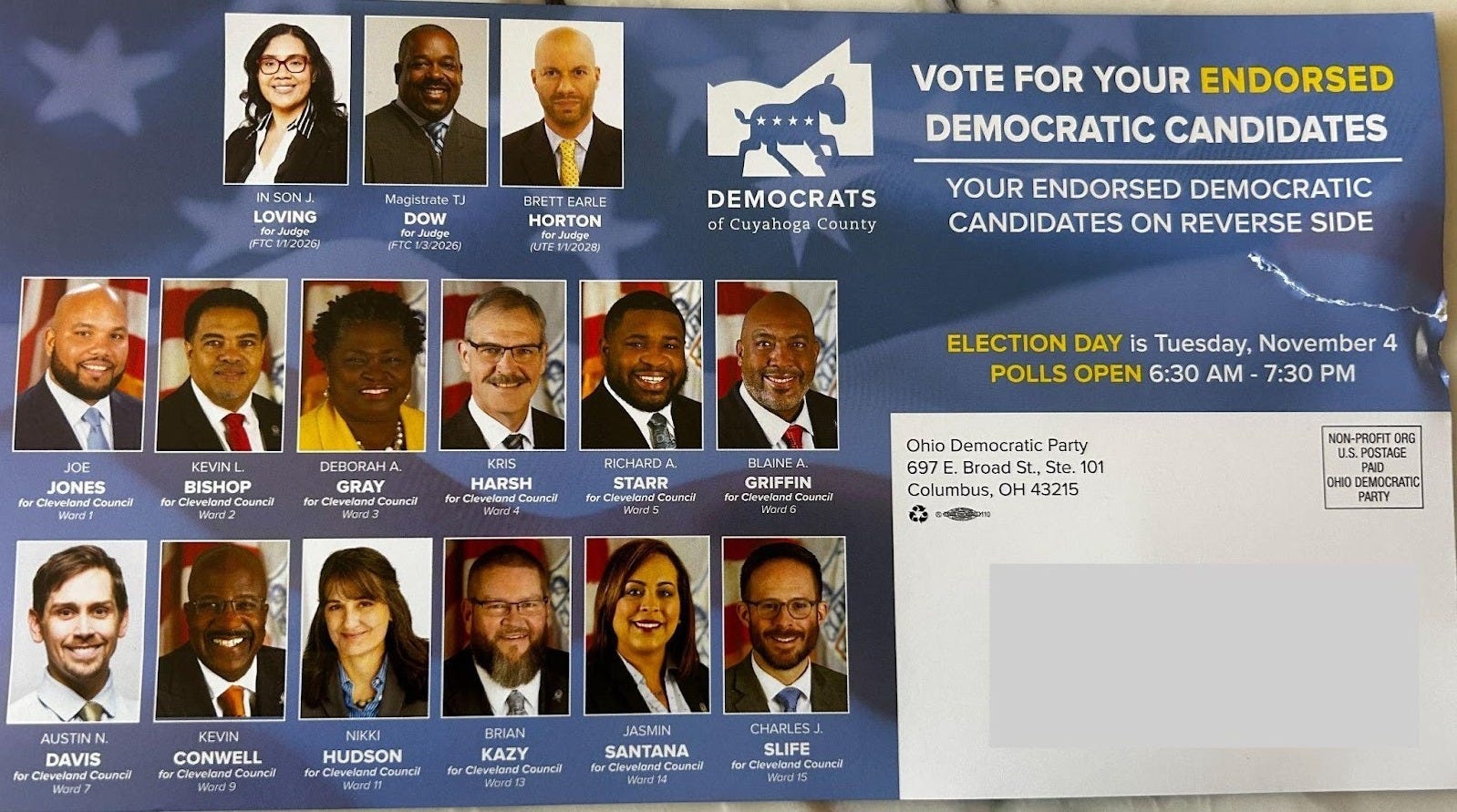
Getting the endorsement of the elected and appointed Executive Committee is essentially the most reliable way to get elected in Cuyahoga, particularly in the city of Cleveland, and is especially important during Primary elections, when there may be two or more Democrats battling each other.
So it’s naturally a great way for the Party to raise money. And during a time in which the Party has a minimum monthly expenditure of $25K to maintain everyday operations, the Party definitely needs reliable ways to raise money.
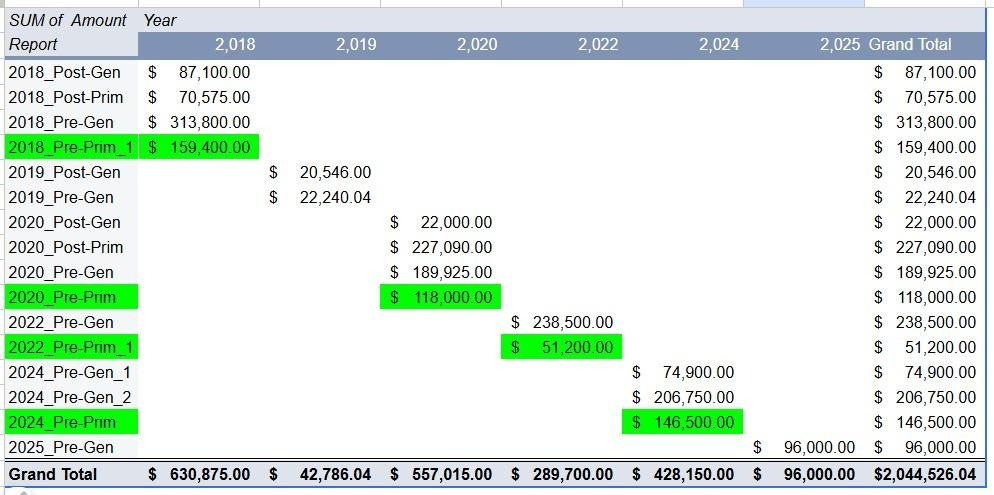
Even more lucrative is when the Party has two Sample Ballot operations within one election year, or endorsements/slate cards for both the Primary and the General elections.
In the years in which the Party had operations for both the Primary and the General (2018, 2020, 2022, & 2024), the Party made on average ~$118K more than without it.***
Candidate Assessment Totals by Report, 2018 - 2025
Understandably, folks are concerned about the type of undemocratic behavior this financial dependency incentivizes, particularly during primary elections, and about the consequences of the Party financially depending on closed-door endorsements to pay the salaries and benefits of its two-member team.
Consequences such as the Party using the appointment option of the Executive Committee for the Chair and Ward/City Leaders to stack their committees with their relatives and close personal friends, an accusation made even back in 2021 when Democratic Club President Paula Kampf accused former Party Chairwoman & current Congresswoman, Shontel Brown, of purposely removing Executive Committee members in order to stack it with her own allies.
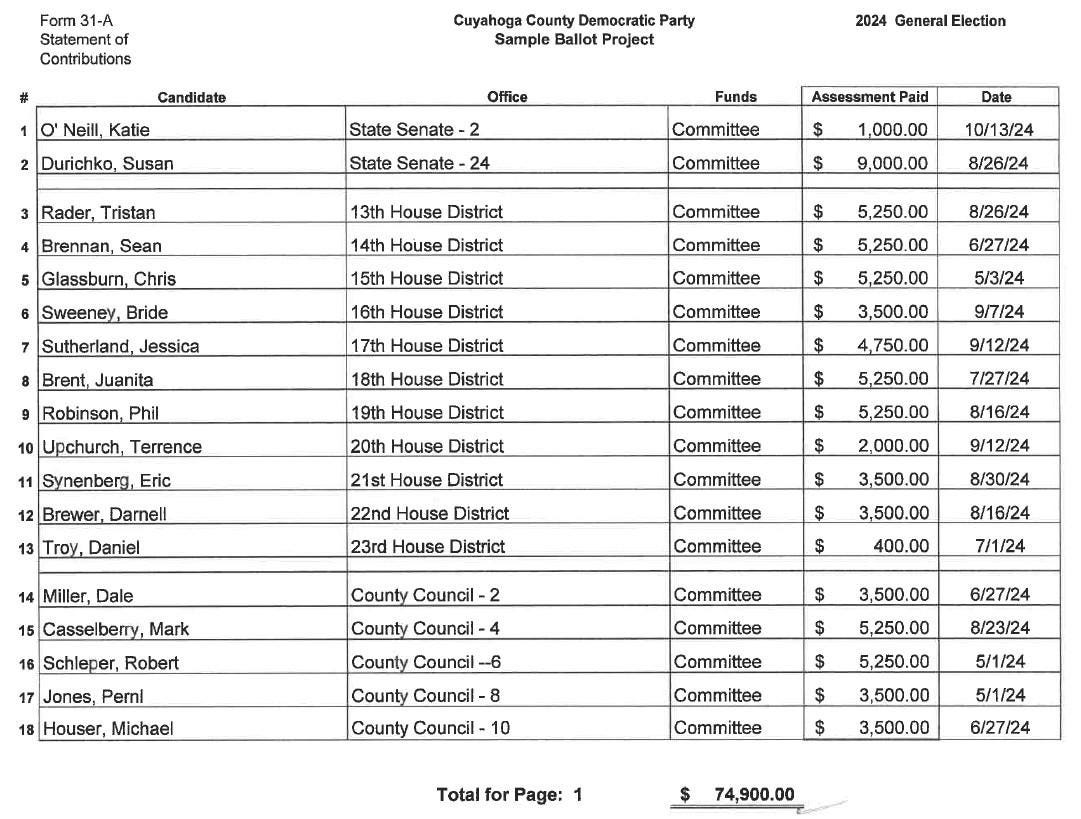
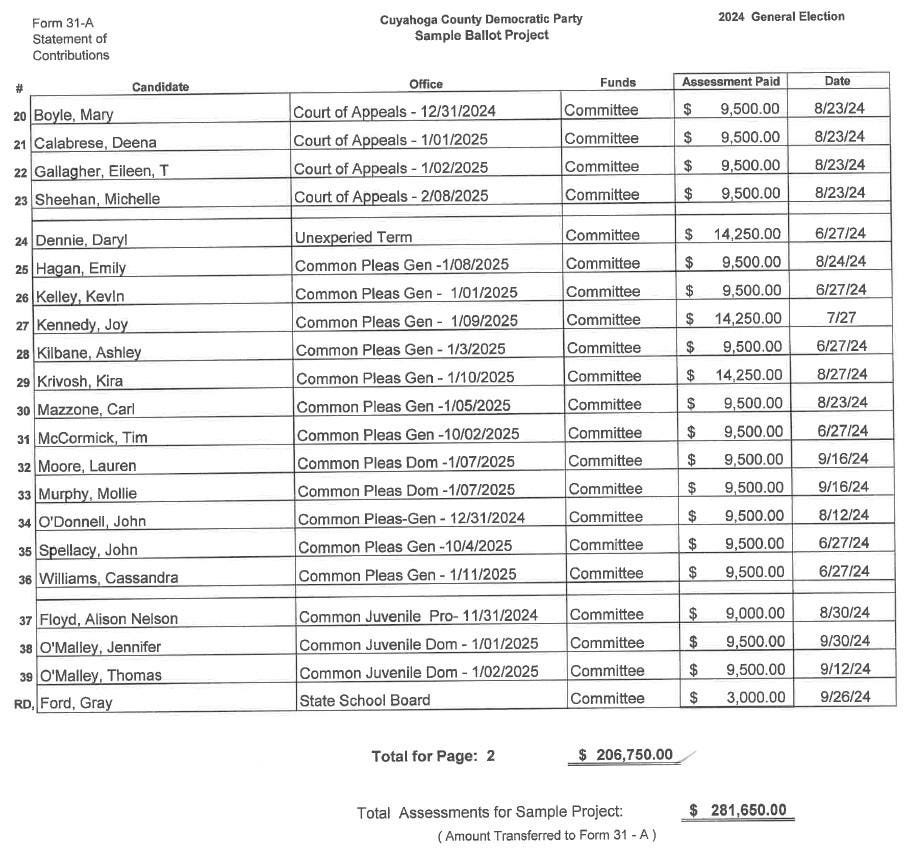
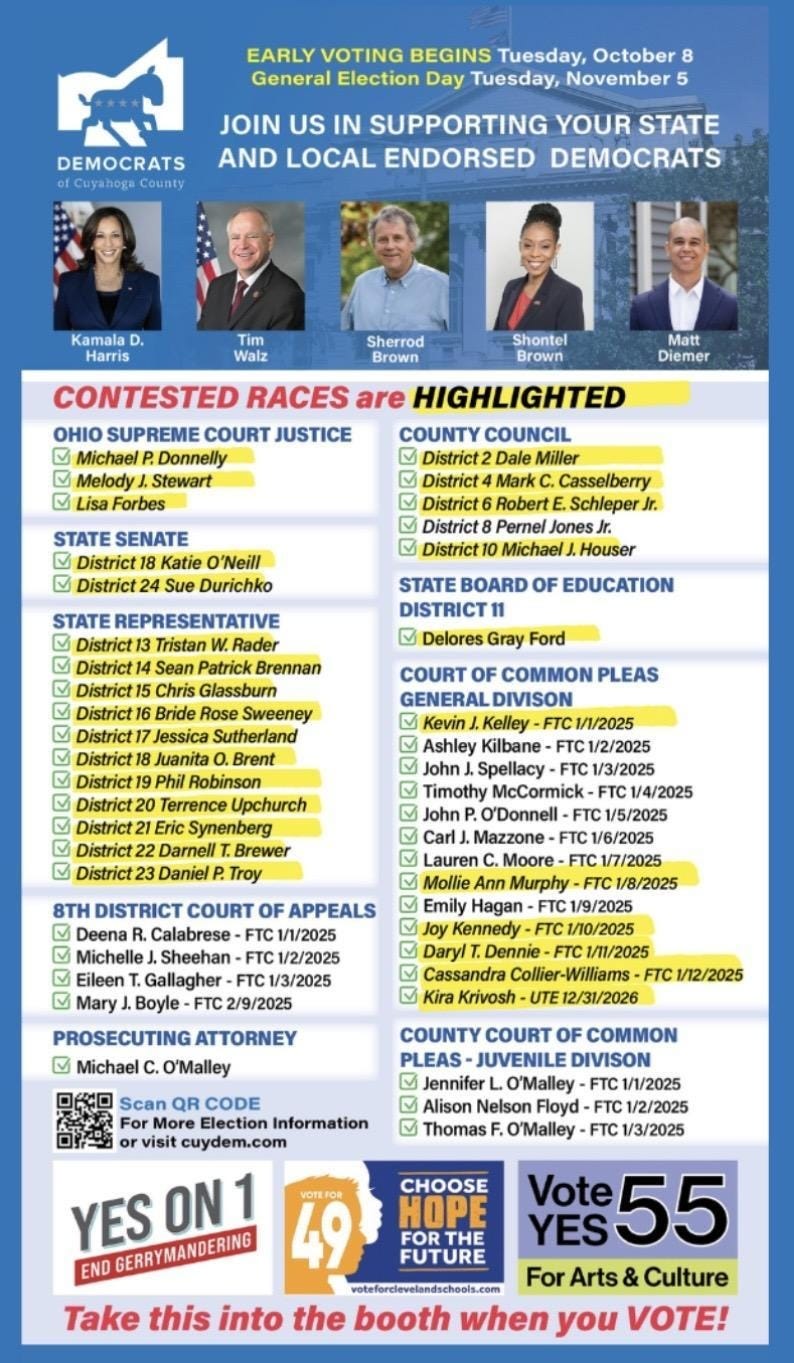
Or consequences like financial harm to the Party when a candidate doesn’t pay the Candidate Assessment fee despite being featured on Party endorsement materials, like County Prosecutor Michael O’Malley, who is the only Cuyahoga candidate from the 2024 General who still hasn’t paid any portion of that year’s $9.5K county-wide Candidate Assessment fee (either because he won’t or the Party won’t force its collection).
Candidate Assessment Fees by Candidate, 2024
Cuyahoga 2024 Democratic Sample Ballot
But what if the approach to the Executive Committee endorsement was not used as a ceiling but instead as a floor? As in, what if the Executive Committee endorsement functioned more as a way to grow the base and raise more money for the Party?
A process that can result in more than one recommended Democratic candidate demands that candidates engage with the general electorate, as opposed to candidates mainly obsessing over either elected or appointed Executive Committee members and neglecting any attempt to energize and activate voters.
Additionally, a process that can result in more than one recommended Democratic candidate creates a situation where, instead of the Party raising money from the one candidate that received the pre-primary endorsement (or not raising anything in the event of no candidate reaching 60%), it has the potential to raise money from the two candidates that received the pre-primary recommendation.
A compromise such as this takes into consideration both the concerns of those who feel the current Executive Committee endorsement process is undemocratic and those who recognize the Party desperately needs money in order to attempt to reverse its anemic voter turnout.
Currently, the Party relies upon the infantilizing claim that the current endorsement process is the only way a Black candidate can get elected city– or county-wide.
This is a claim frequently repeated even in Progressive circles and is arguably the perfect example of exploiting racial tensions to further an undemocratic practice—the Cleveland Way, if you will.
Embracing a recommendation process could be one answer to the Party’s need to raise enough funds for the minimum monthly expenditure of $25K… and, hopefully, eventually for other expenditures geared towards increasing turnout.
And as many argue, embracing a recommendation process could be one way to gradually relinquish the machine-like political hold the pre-primary Executive Committee endorsement has on the throat of Cleveland’s democracy.
***Important disclaimer—these summaries are from the campaign finance data publicly available through the Cuyahoga County Board of Elections, which means the data is only as accurate as it is properly maintained and reported by the treasurer responsible for the relevant campaign finance report.
There are many errors in the CCDP’s campaign finance reports, including individual errors, such as including an expense dated 3/20/2002 in a 2022 report.

But also summary errors, such as switching between reporting totals for a page versus reporting running totals within a 2023 report.
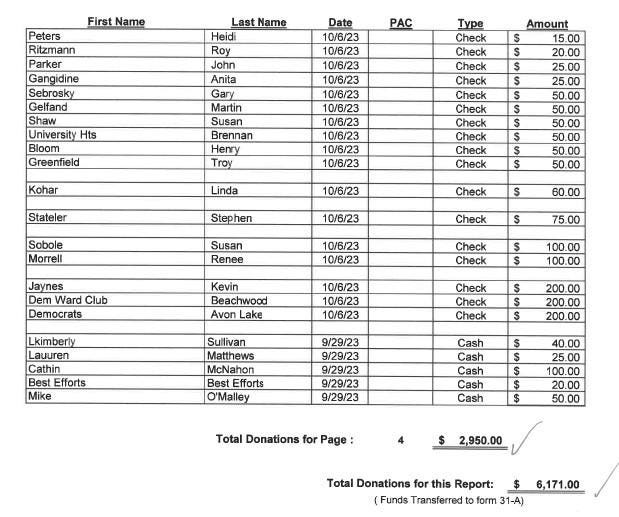
What this means is that it is likely that the compiled data extracted from the publicly available reports may differ slightly from what the CCDP may claim to have on record internally.
Furthermore, the categories used in this analysis to describe contribution types have been created or refined to facilitate comparative analysis, as the reports themselves often refer to similar expenditures and contributions differently, often within the same year or even within the same report.
This categorization inconsistency is particularly pertinent when considering the Candidate Assessment revenue type.
For example, in 2018 and 2019, donations from active candidates that were itemized on pages titled “Other Income” are still categorized as a Candidate Assessment contribution in this analysis.
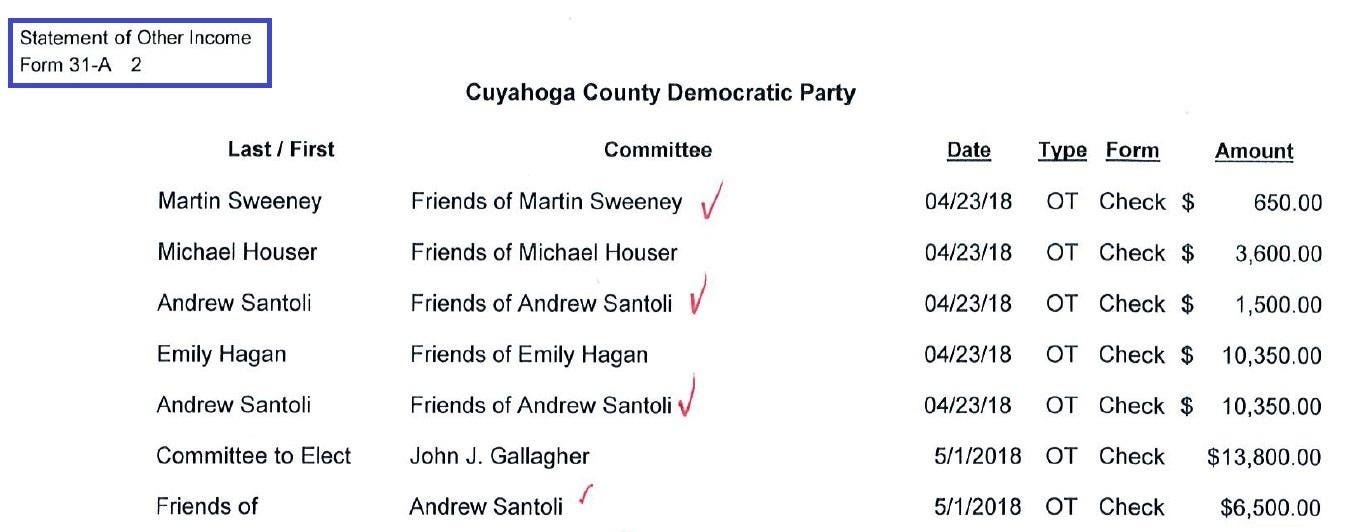
But in 2020, the Pre Primary report instead lists donations from active candidates not included in the “Other Income” section, though this analysis still codes them as Candidate Assessment contributions.
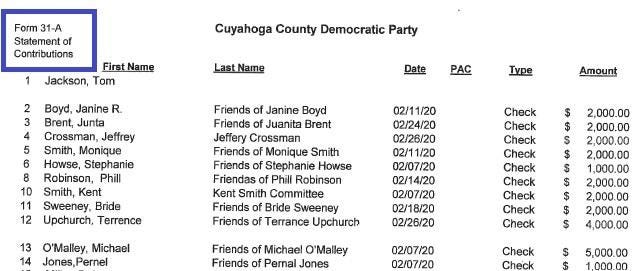
Later that same year, in the Pre-General Report, CCDP began referring to this specific type of contribution as “Candidate Assessment Contributions.”
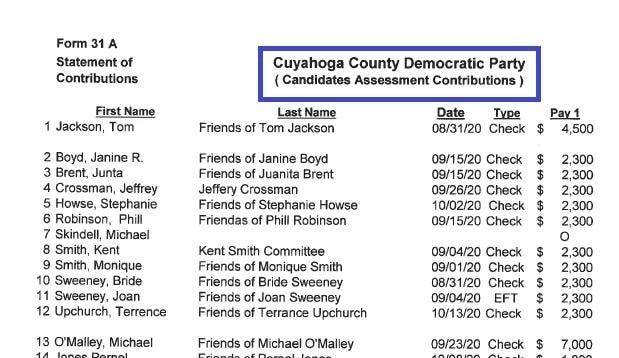
These variations are unfortunate, but that’s a topic not explored here.
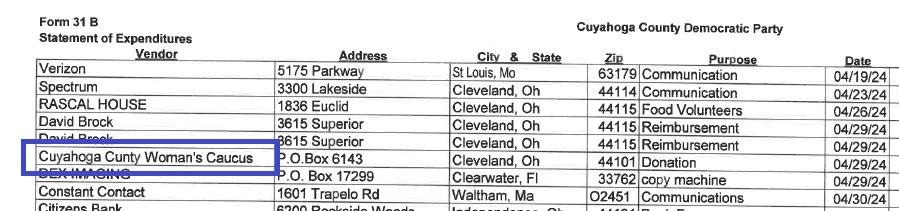
For now, one reader has pointed out perhaps one of the more shocking typos featured on a 2024 Pre General report, in which the Party appears to have made a donation to the “Cuyahoga Cunty Woman’s Caucus.”
Casey Putsch called on “Beer Hall rally,” immediately went crying about being defamed by a blogger
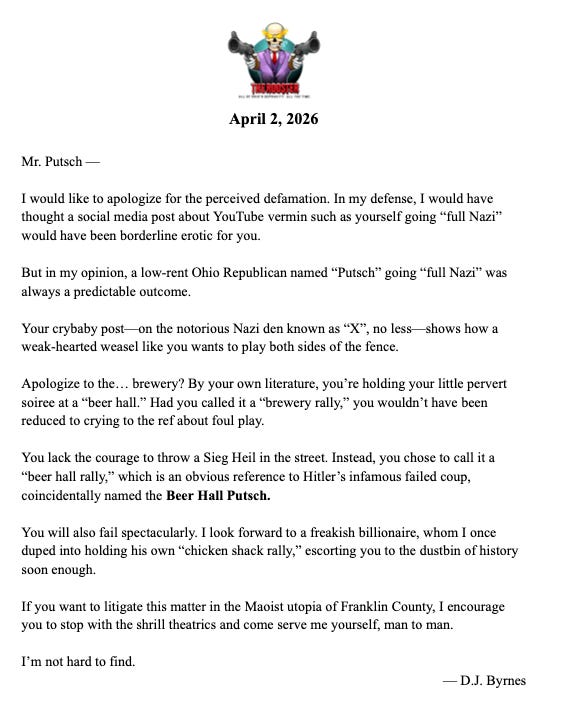
YouTube vermin and gubernatorial candidate Casey Putsch is a textbook example of the current base of the Republican Party.
Yesterday, Putsch unveiled “a beer hall rally” at what normal people would call “a brewery” in Toledo. I’ve drunk 10,000 beers in my lifetime, and I’ve never once heard anyone refer to a brewery as “a beer hall.”
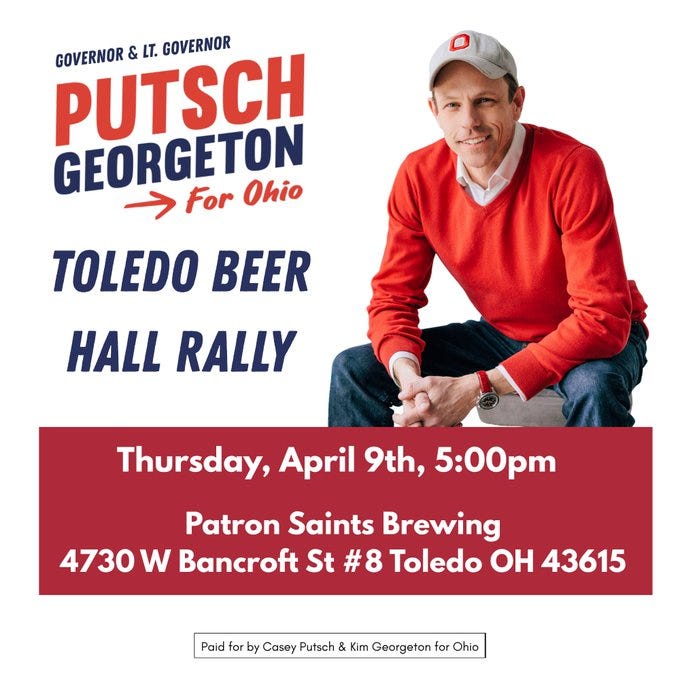
That’s because Putsch’s team is making a thinly-veiled reference to Hitler’s failed coup, coincidentally enough called the Beer Hall Putsch.
I made the obligatory Instagram graphic because blunt talk is part of The Rooster guarantee.
Putsch, in typical soy right fashion, acted like he had grounds for defamation:
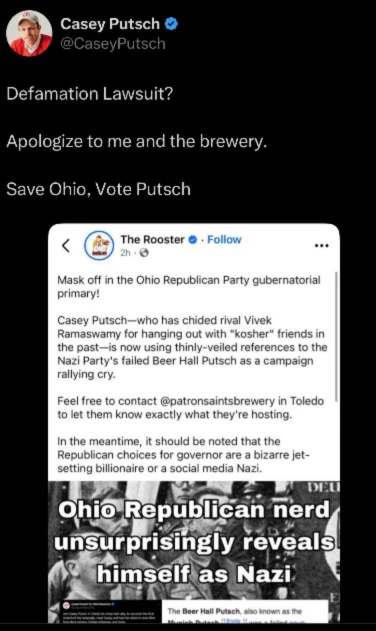
You’ll notice how the beer hall suddenly morphed back into the brewery, while the so-called “organizer” of the event pleaded ignorance in my Instagram comments:
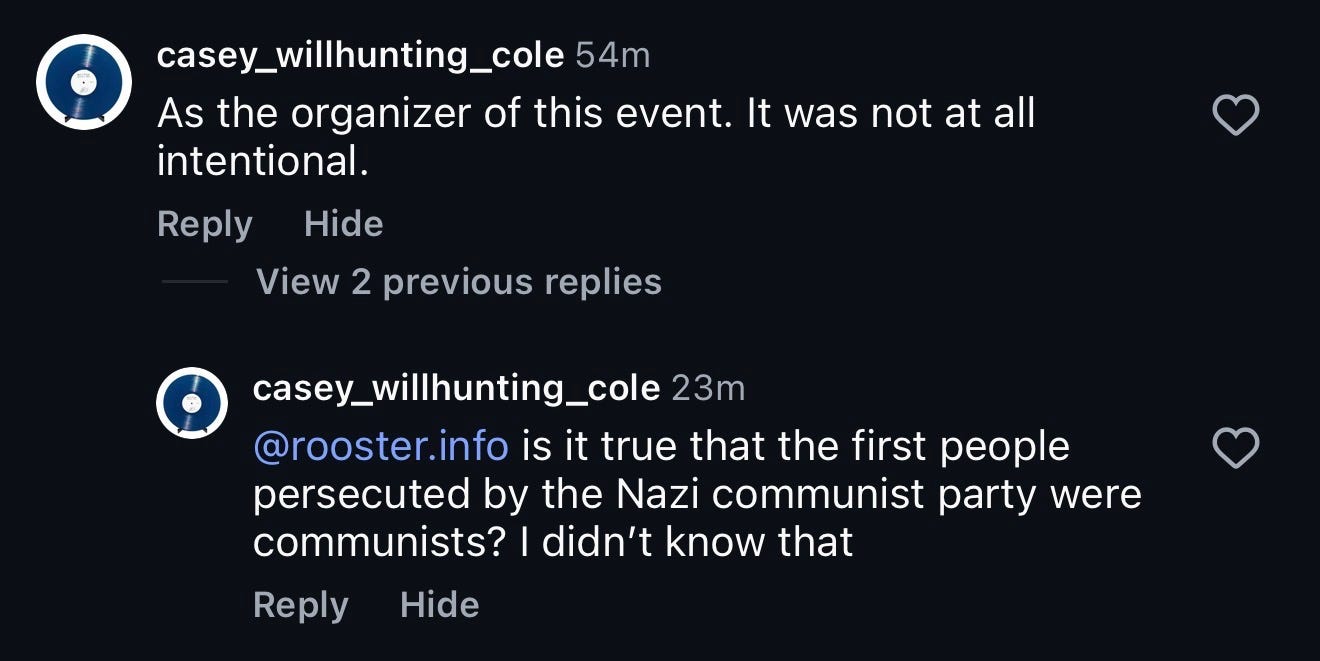
Maybe Mr. Cole is telling the truth. He certainly seems ignorant enough about history to fit the bill. Even if he only booked the brewery for the event, Putsch (or his team) knew exactly what they were doing with the “beer hall rally” text in the flyer.
If Pustch is not a Nazi, it’s weird, then, how he has the support of them:
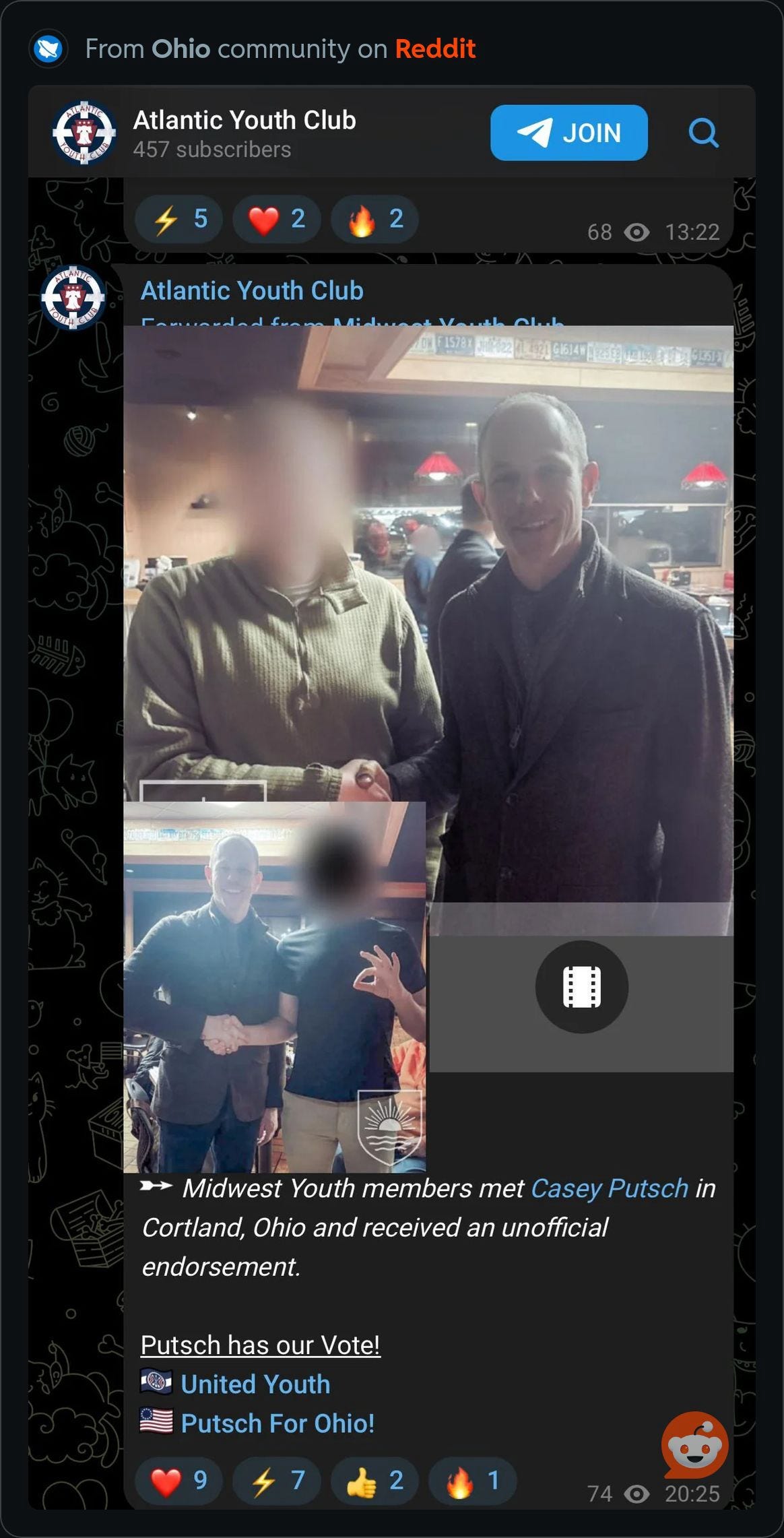
But Putsch is playing a game typical of cryptofascists. He signals in public and then cries about unfair treatment in an effort to pull any non-Nazi followers to their right.
It’s predictable, but I’m never going to stop speaking and telling people what’s happening in broad daylight in their state.
I expect it from Putsch. But what should alarm most of us is that the Ohio Republican Party, apparently so concerned about antisemitism that they’re working on multiple pro-Israel bills at the Statehouse, can’t be troubled to call a gubernatorial candidate to account.
Compare their silence to Putsch’s antics to their response when no-chance Democratic Attorney General candidate Elliot Forhan said he’d (legally) execute Donald Trump if he tried another Jan. 6th.
It’s because they know the base of the party—its true id—is with Putsch. I don’t expect him to win, but I expect him to earn ~250,000 votes.
But this also shows why the Legislature breaks before elections. Legislators mumbling and fumbling on camera isn’t exactly the image they want to present to voters, even the Neo-Nazis they will never disavow.
THOSE WMDs. How Austria’s guilty verdict could reshape recreational rock climbing… Hackers made a big mistake by making death threats against this security researcher… Fake signals and American insurance: How a dark fleet moves Russian oil… A Texas fake pregnancy crisis center told her everything was fine, and three days later, she was in the ER… What in God’s name is Pete Hegseth doing in Iran?
 | A guest post by
|
Like so many on the right. Walks and talks like a duck…»but don’t call me a duck!»
Is "Putsch" his real name because that's just too convenient.