

Woody or Wexner?
It's a simple question made complicated by Ohio State Board of Trustees chairman John Zeiger's client, Leslie Wexner, lying for six years about when he ended his friendship with Jeffrey Epstein.

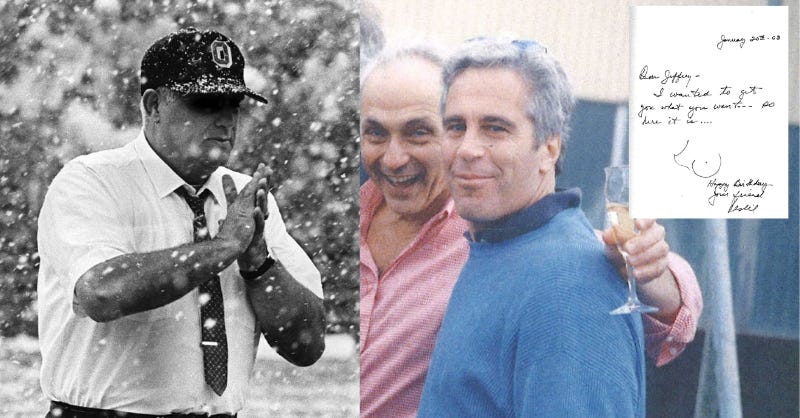
On Wednesday, the Ohio State survivors will pose a simple question to the Board of Trustees: Wayne Woodrow Hayes or Leslie Wexner?
It’s not a rhetorical question.
In 2007, Ohio State attached the name of the sports-adverse Wexner to the Woody Hayes Athletic Complex, thanks to a $5 million donation, organized by Abigail Wexner as a birthday gift to her husband.
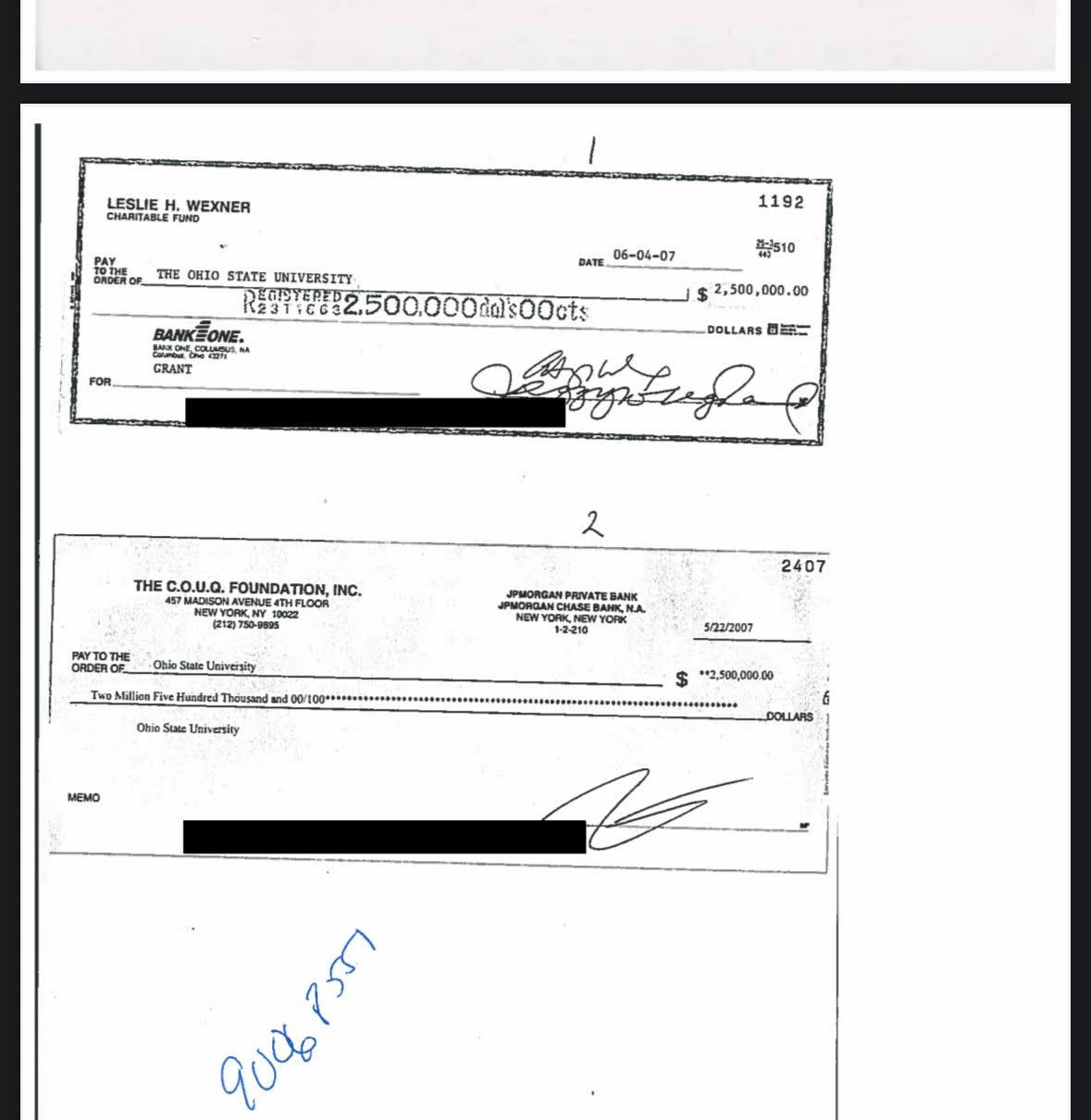
Wexner put forth $2.5 million of her husband’s money.
But the “Les Wexner Football Center” at the Woody Hayes Athletic complex was only made possible by an additional $2.5 million check from the private foundation of Jeffrey Epstein, the most infamous dead pedophile in American history.
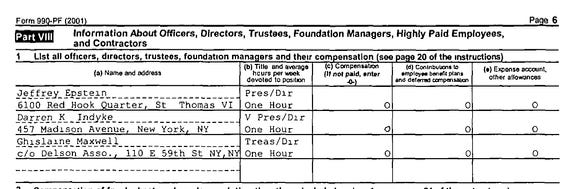
We know the C.O.U.Q. Foundation is an Epstein-controlled entity because its 2001 tax returns, obtained by The Rooster, list Epstein as president, his lawyer, Darren Indyke, as vice president, and imprisoned sex trafficker Ghislaine Maxwell as treasurer.

Epstein was first arrested in 2006 on a state felony charge of soliciting a prostitute, with the FBI noting the charge didn’t reflect “the totality of Epstein’s conduct.”
In May 2007, the same month Ohio State cashed Epstein’s check, assistant United States attorney Marie Villafaña “submitted a draft indictment outlining 60 criminal counts against Epstein, along with a memo summarizing the evidence assembled against him,” according to NPR.
In that court filing, as spotted by Bloomberg, Villafaña stated that she had contacted Wexner, the then-chairman of Victoria’s Secret and Bath & Beyond, for insight into Epstein’s alleged crimes.
That move infuriated Epstein, who deployed his team of legal eagles in his defense.
From Bloomberg:
Epstein grew furious when he learned that prosecutors had broadened their investigation’s scope, the emails show.
His high-powered team of lawyers, including Gerald Lefcourt, Harvard Law School professor Alan Dershowitz, former Bush administration official Jay Lefkowitz and former Independent Counsel Kenneth Starr, argued that Villafaña was pursuing baseless claims to pressure their client into a plea deal.
They launched an aggressive campaign to discredit her attempts to follow the money and pressured her higher-ups to remove her and others from the case—or scuttle the case entirely.
Nobody reading The Rooster likely needs a refresher on what happened next.
But if you do, the Palm Beach Press detailed how Epstein’s eventual sweetheart plea deal laid the groundwork for 15 more years of sexual trafficking, rape and white-collar financial crimes, an enormity of which we’re still unwinding six years after Epstein’s alleged death by suicide.
Epstein wouldn’t sign his slap-on-the-wrist until 2008. But Wexner has long maintained that he cut ties with Epstein “in 2007,” while painting himself as the victim of a decades-long con.
Thanks to recently revealed emails from Epstein, we know that Wexner has been lying about that timeline for the past five years.
In 2007, the Wexners were at least smart enough to see the storm brewing with their longtime financier.
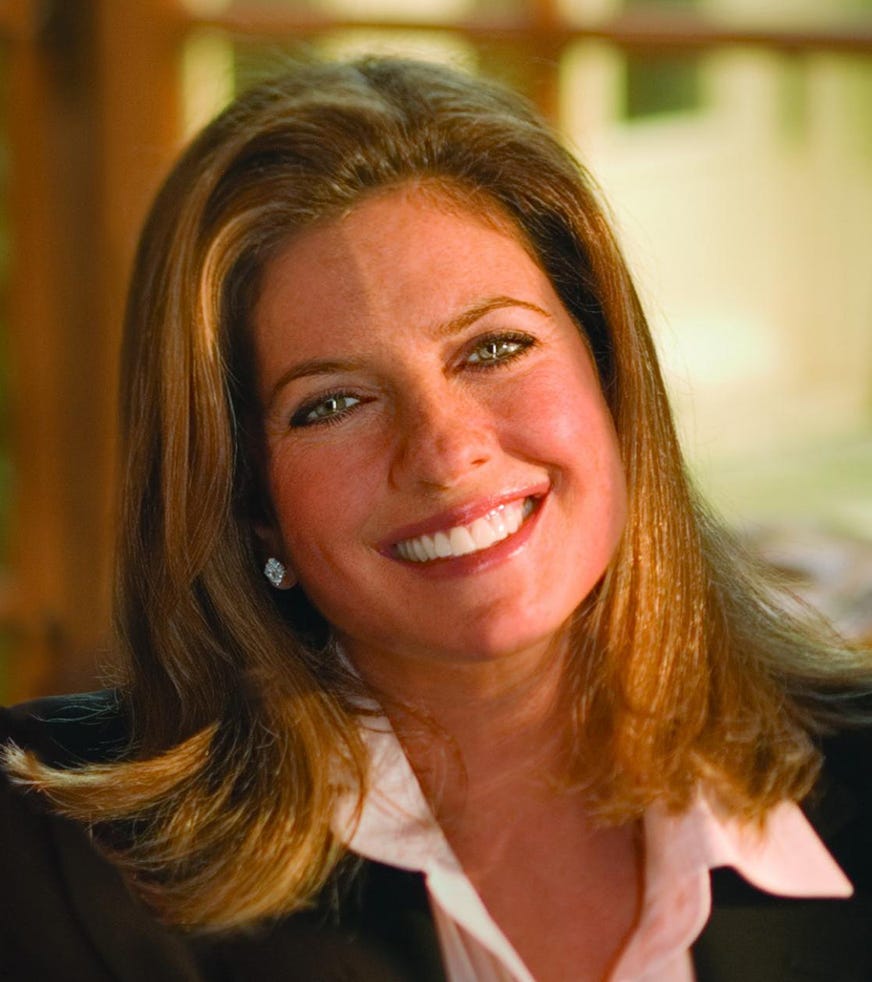
In late November of that year, with the Great Recession days away from kicking off, Abigail Wexner dismissed Epstein’s concerns that she might no longer want to associate with a man whom federal authorities were investigating for gross sexual misconduct with several underage women.
“In the end, it’s fine and not a problem,” Abigail Wexner told Epstein after speaking with his lawyer.
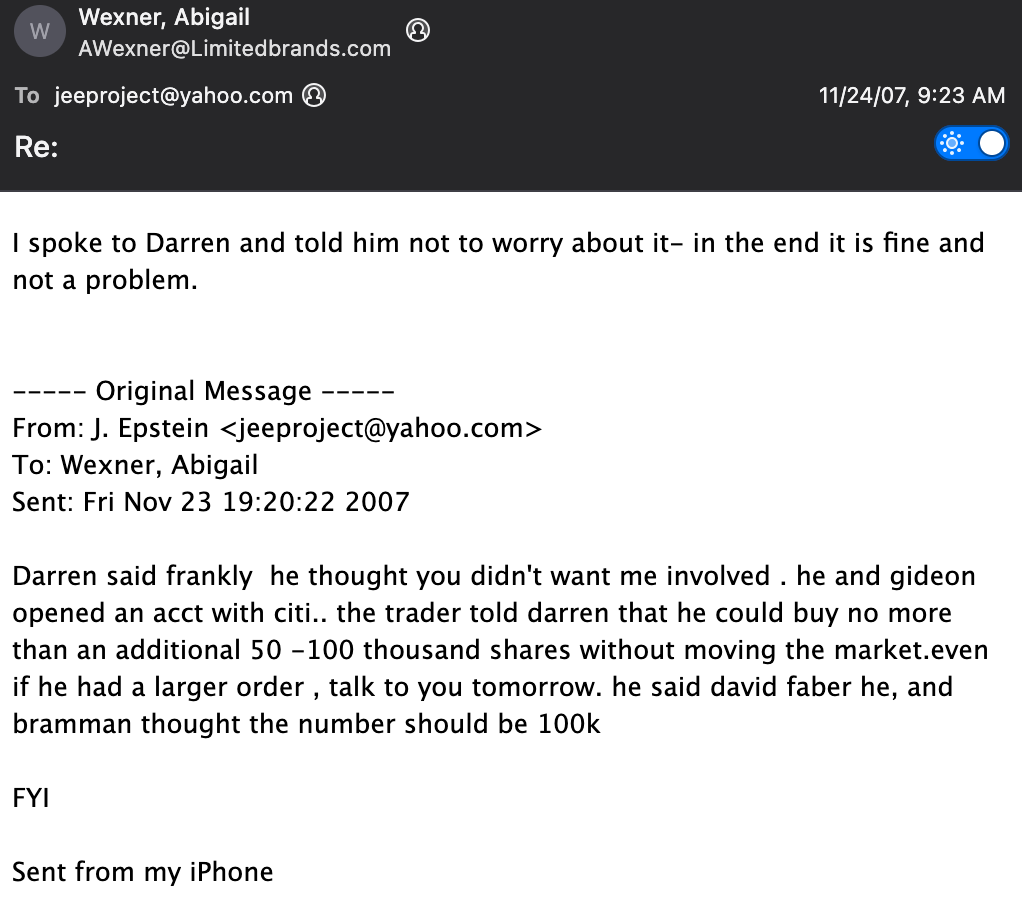
Apparently, Epstein offered the kind of financial advice that her billionaire husband’s wealth couldn’t otherwise obtain—Epstein’s lust for teenage girls be damned.
In December 2007, seven months after Ohio State cashed $2.5 million in Epstein’s money, the Wexners worked to distance themselves from any public relations nightmare that Epstein’s eventual conviction might spark.
From Drop Site News, who obtained the latest tranche of Epstein emails:
As a looming public relations crisis over Epstein’s legal troubles crept closer, Abigail Wexner executed a plan to claw back family funds trapped in C.O.U.Q. Foundation, a large Epstein-controlled entity which had been used to fund Jewish organizations, university research, youth programs, and hospitals.
On December 26, 2007, the Wexners’ attorneys prepared IRS forms to create a new private foundation for Leslie Wexner, called YLK Charitable Fund. Indyke emailed Epstein a draft copy of the IRS submission, asking for Epstein’s approval on a disclosure document that showed Epstein’s C.O.U.Q. trust would transfer more than 25% of its assets into YLK. The new fund had only two officers, Peg Ugland and Abigail Wexner; it was named “YLK” after the initials of Abigail’s father, Yehuda L. Koppel, of Israel’s founding generation.
On January 1, 2008, six days after Indyke emailed the IRS paperwork to Epstein, two Epstein-controlled entities dumped almost their entire balance sheets into Abigail’s new fund. Epstein’s C.O.U.Q. Foundation transferred about $12 million in securities, and his Financial Trust Company contributed Apple stock worth roughly $34 million.
What Drop Site didn’t mention was that the current Ohio State Board of Trustees chairman, John Zeiger, whose firm has long represented Wexner, was CC’d on the email that started Wexner’s attempt to claw back their money:
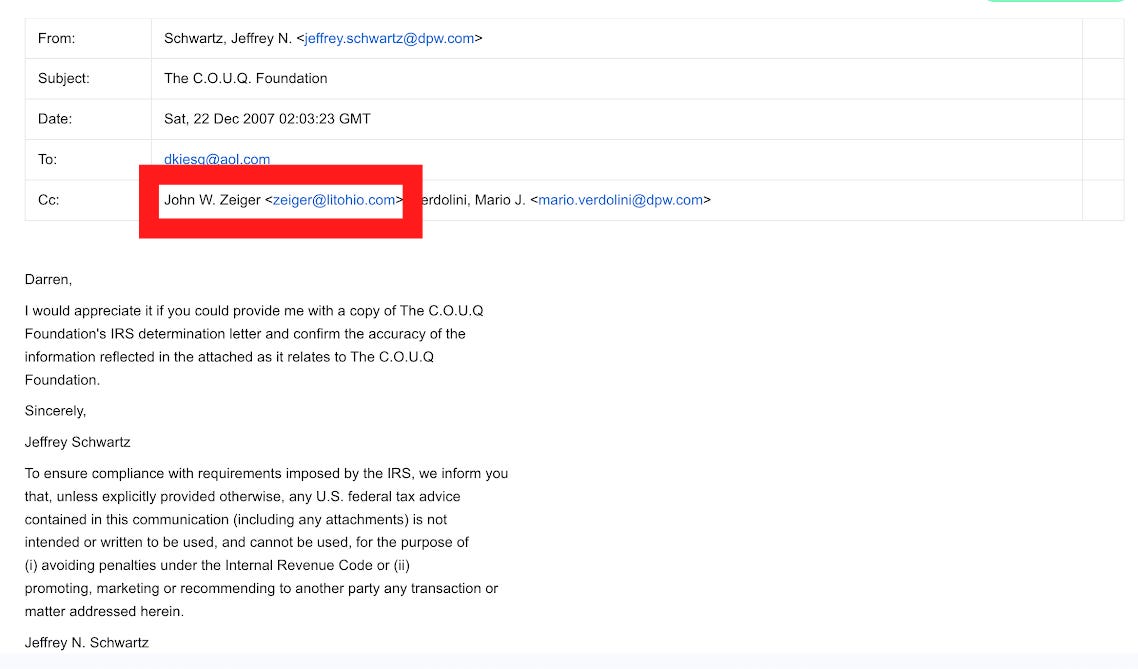
A couple of hours later, Indyke forwarded the request to Epstein:
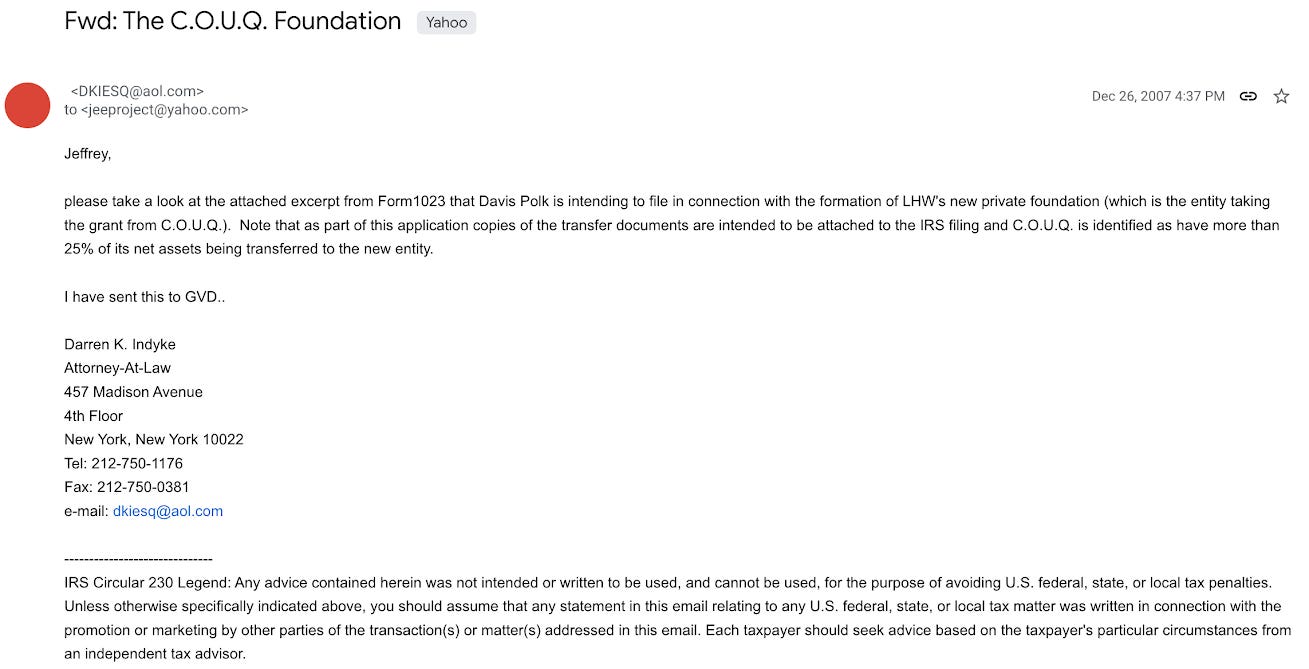
Even without Epstein’s apparent response, if one existed at all, these emails demonstrate two irrefutable facts: The Wexners moved to protect themselves from association with Epstein money in December 2007—seven months after Ohio State placed Wexner’s name alongside Hayes’ with Epstein money—and that his longtime lawyer, Zeiger, knew about the machinations.
There is no evidence that Wexner, who, again, was in his second stint as Ohio State trustee, contacted the university administration about the problems that $2.5 million check from Epstein might pose.
Wexner’s problems don’t stop there.
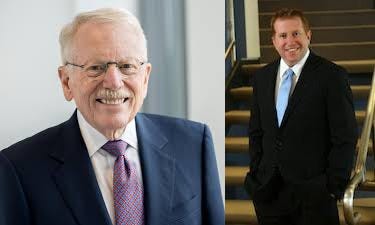
Chairman Zeiger isn’t the only member of Zeiger, Tigges and Little LLP to appear in the Epstein files.
Zeiger’s son, Matt Zeiger, who is technically Wexner’s attorney on file, also appears in Epstein’s emails on a chain he started on Dec. 7, 2022, to request information about Wexner’s possible involvement with Mellon Bank ahead of a board of trustees vote.
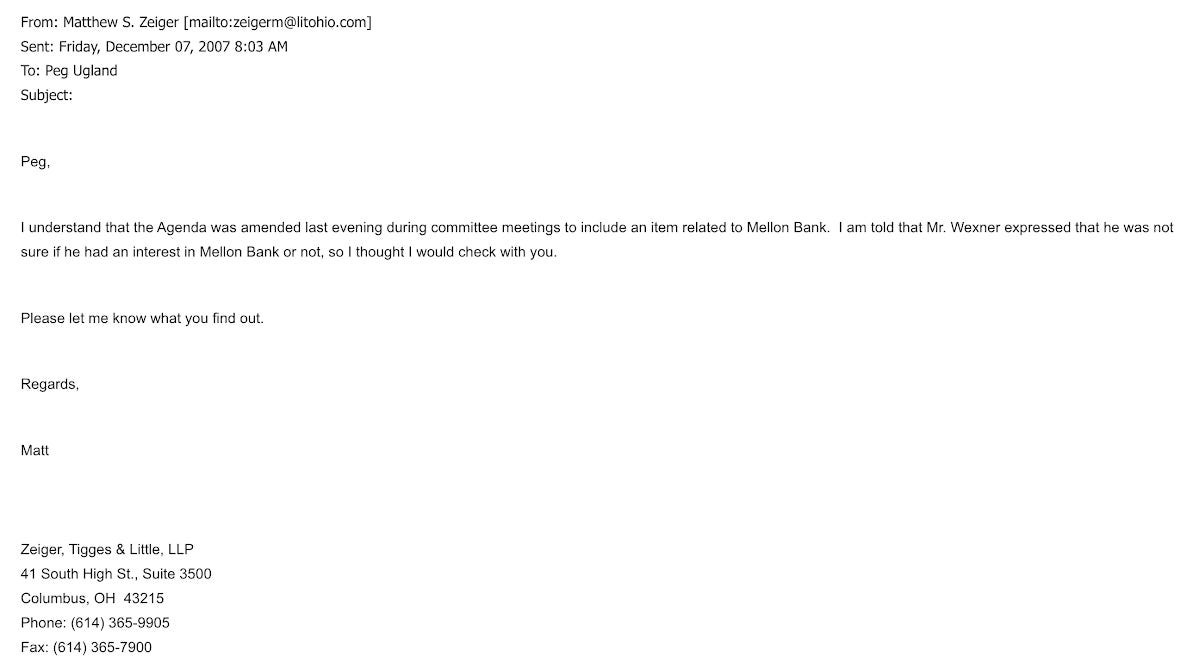
Peg Ugland is the Wexner financial controller, but that title might be in name only.
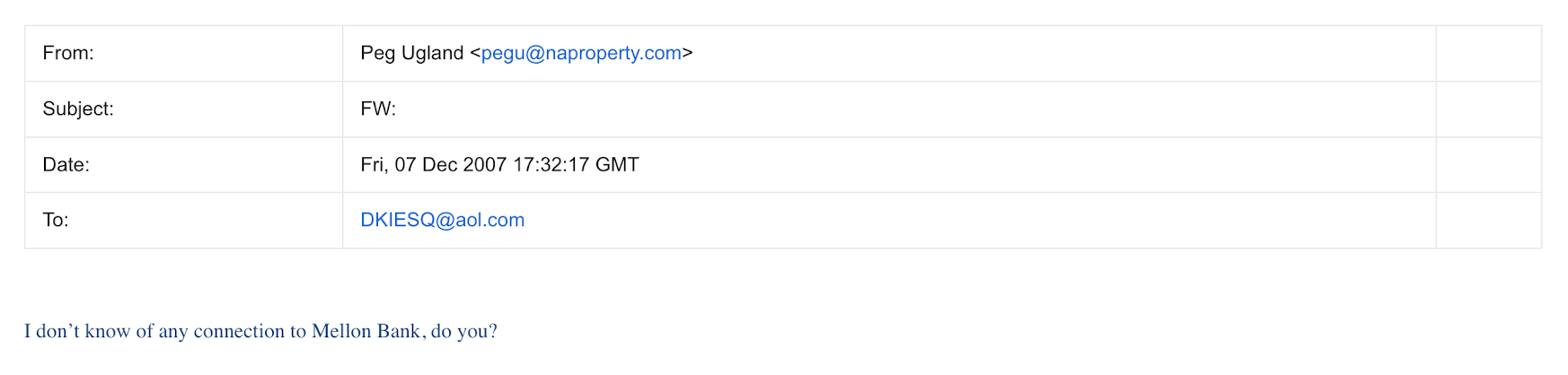
Because four hours later, Ugland turned to Epstein’s lawyer in search of finality on Wexner’s potential commitments to Mellon Bank.
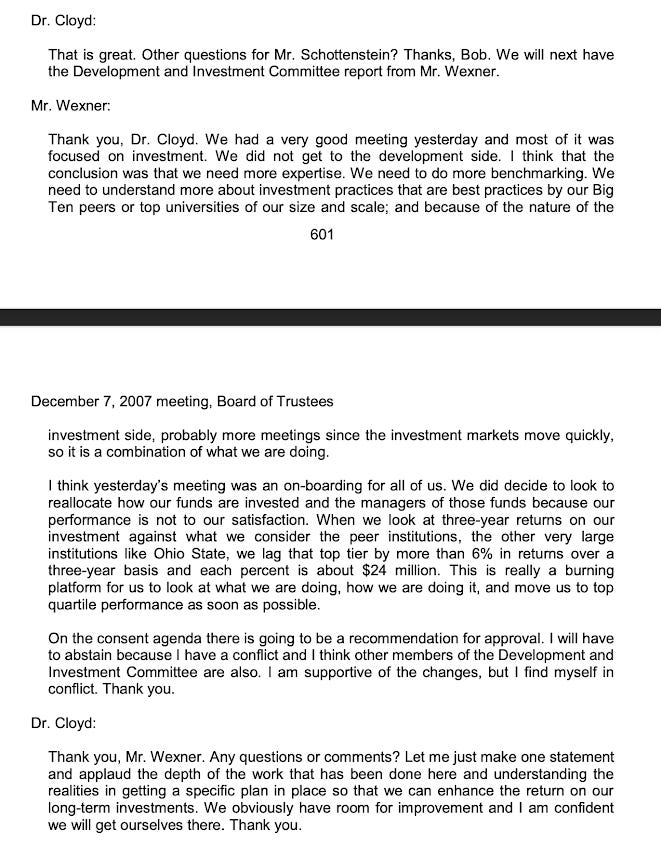
Since Wexner’s financial director couldn’t offer timely information about a potentially sizable investment, Wexner claimed to have a conflict with Mellon Bank at that morning’s trustees meeting:
That evening, three hours after Ugland had contacted Indyke, the lawyer turned to his client in search of finality on Wexner’s finances:
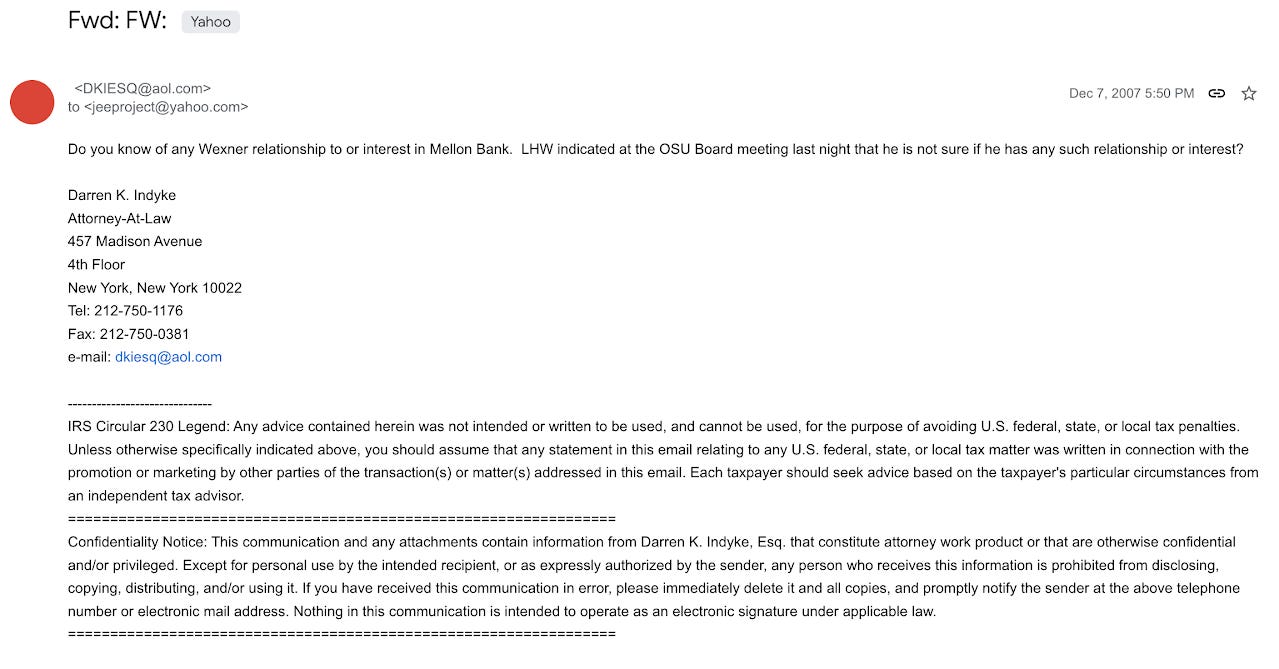
We can only speculate about Epstein’s response, if any.
What we do know is that, 16 years after concerns about Wexner’s ties to Mellon Bank, it’s at the center of multiple lawsuits alleging that its executives knowingly enabled the money laundering that financed Epstein’s criminal organization.
From Luc Cohen of Reuters:
NEW YORK, Oct 15 (Reuters) - A woman who says she was abused by the late financier and sex offender Jeffrey Epstein sued Bank of America and the Bank of New York Mellon on Wednesday, alleging the banks knowingly provided financial services that enabled his sex trafficking operation for years.
Bank of America and BNY declined to comment.
[…]
[Jane Doe] is represented by law firms Boies Schiller and Edwards Henderson, who previously secured settlements of $75 million and $290 million with Deutsche Bank and JPMorgan, respectively, over their alleged financial ties to Epstein.
Neither Deutsche nor JPMorgan admitted wrongdoing in agreeing to settle.
Congress is also hunting for information about Mellon Bank’s Epstein connections.
From Ranking House Judiciary Committee Rep. Jamie Raskin:
“New lawsuits against Bank of America and BNY Mellon allege their systematic failure to report suspicious activity around Jeffrey Epstein’s sex trafficking operation caused massive harm to victims.
“A week before these filings, we demanded this very information, asking why banks, for years, processed $1.5 billion in Epstein-linked transactions without flagging them and filing reports required by law.
“We stand with survivors in exposing the truth about the enablers and co-conspirators of this decades-long, international human trafficking ring.”
Epstein survivors are pushing the Wyden Bill in the United States Senate, which would force the United States Treasury Department to turn over Epstein’s banking records.
Until then, we still don’t know anything about Wexner’s alleged investment with Mellon Bank or why, out of all the banks in America, Ohio State chose to do business with that one.
Regardless, Wexner’s contact with Epstein continued, in the most charitable interpretation, at least six months after he claimed to have severed ties for the past seven years
On June 26, 2008— four days before Epstein reported to his country club of a prison—Wexner sent Epstein an email in which he chided his longtime friend for breaking his “No. 1 rule.”
Thirty-one minutes later, Epstein responded that there was “no excuse.”
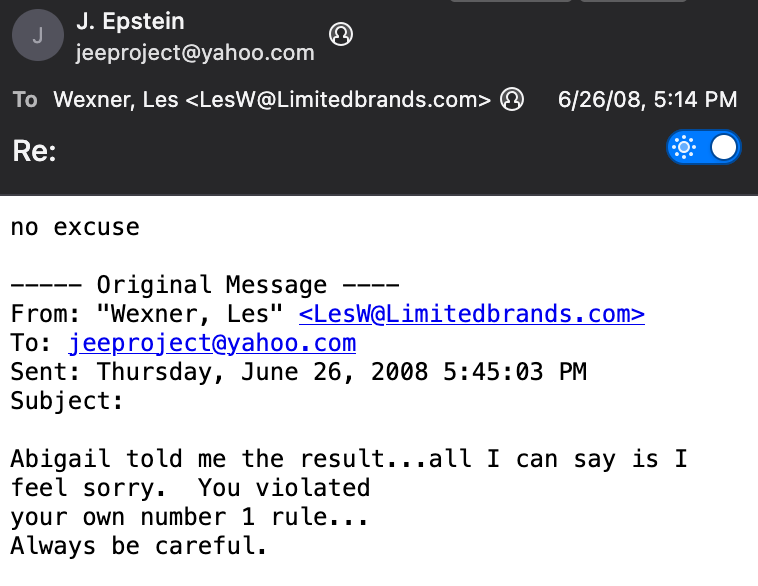
Why would an ostensible financier, going to prison for molesting a minor and suspected of much worse, feel that he only faced consequences because he failed to “be careful?”
Why did Wexner feel sorry for Epstein, from whom he was ostensibly trying to recoup “misappropriated” money?
Why did he think the problem was Epstein failing to be careful, rather than Epstein’s pedophilia, that the United States Attorney’s office had already informed him about the year prior?
Why did the two apparently discuss the need to be careful despite their wealth and influence?
Is it because Wexner bonded with Epstein over shared sexual deviancy?
If nothing else, that would explain why, five years earlier, Wexner wrote “bawdy” personalized birthday card as part of a celebratory book in which Epstein’s associates, from all levels of his life, made overt references to his taste for young women?
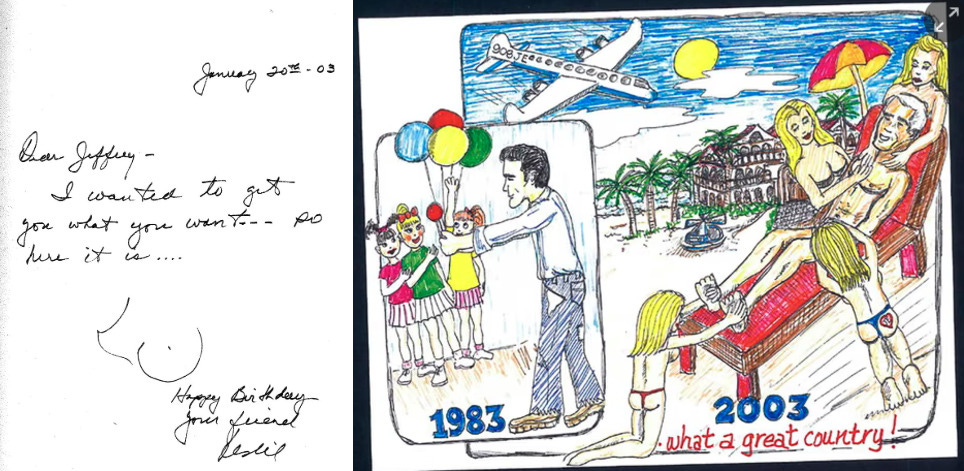
These are the kind of questions that lawyers representing Dr. Strauss survivors could pose to the billionaire under oath in a deposition.
And that’s on top of the main thrust of the proposed deposition, which would be: What did Wexner know when, as trustee chairman in 1997, then-Ohio State President E. Gordon Gee learned about Strauss’ abuse and did nothing about it?
Ohio State’s independent investigation into the Strauss scandal cited then-President E. Gordon Gee an eye-popping 33 times in its final report.
Not that that stopped Ohio State, led by Chairman Zeiger, from rehiring the 81-year-old Gee in August.
Ted Carter’s ‘Wingman’: E. Gordon Gee and the Strauss Cover-Up

The front page of Ohio State University’s website about the Richard Strauss scandal loudly proclaims:
Are we to believe that Gee never spoke with Wexner, the then-chairman of the board of trustees, about Ohio State’s culpability in allowing a university employee to assault at least 177 students over a 21-year reign of terror?
Are we to believe Wexner was not aware of the university allowing Strauss to retire quietly with “emeritus” status, which he then used to continue his abuse in private practice?
It insults the intelligence of anyone familiar with Wexner’s managerial style at Ohio State.
That list apparently doesn’t include Attorney General Dave Yost. Always the dutiful stooge to men and interests as wealthy as Wexner, Yost cried in the press about Strauss victims litigating their lawsuit “in the court of public opinion” by subpoenaing Wexner.
That’s not true.
But even if we were, what choice would Strauss survivors have if Chairman Zeiger hadn’t already adjudicated their abuse to be worth $250,000, with “extraordinary circumstances” allowing for $1 million?
Listen to how quickly Zeiger’s mood changes at the mere mention of Strauss survivors, in this exclusive audio obtained by Johann Geistmeister, a special correspondent to The Rooster, after a Board of Trustees’ Academic Affairs Committee meeting on Aug. 17, 2022:
It’s worth wondering if Zeiger would feel the same way if he entrusted his son’s welfare to a well-respected university, only for a depraved sexual predator to assault that son repeatedly as part of a 20-year crime spree that the university not only failed to stop, but let the criminal retire with dignified grace?
Would Zeiger feel his son was, at best, only entitled to $1 million if that university paid a corporate law firm, led by its chairman’s former business partner, more than $20 million to deny culpability while trying to ensure victims received as little compensation as possible?
And would Zeiger feel his son’s trauma capped out at $1 million if that university’s chairman also represented a reclusive billionaire who refused to answer questions about why he keeps finding himself in the immediate orbit of pedophiles and sexual predators, including while serving in an administrative role when that predator assaulted his son?
That would make him a bad father, if so.
But it would also make him the type of man to have found himself in his current predicament, serving one master at the blatant disrespect of the other.
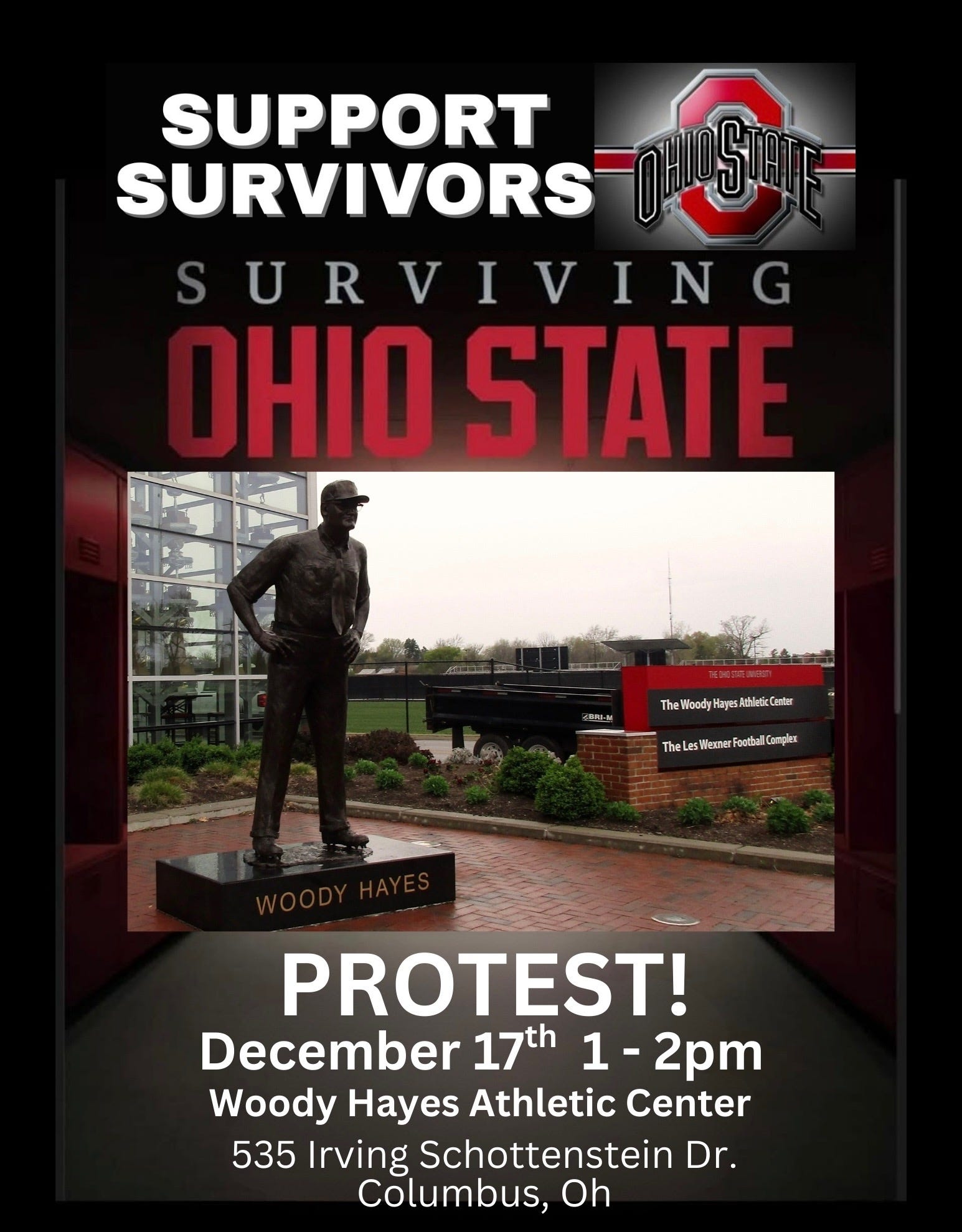
You can support Ohio State survivors demanding that Wexner’s name come down from the Woody Hayes Athletic Center on Wednesday:
BRAVO! Y’all put traditional «investigative» reporters to shame.
I think "bawdy" is a euphemistic word for that card from Wexner to Epstein, more appropriate to an old Playboy cartoon about a boss ogling his big-breasted (adult) secretary. I'd go with "appalling" or "loathsome."