

Apologies to the Conman...
Plus, the Elephant in the Room returns to show how Speaker Matt Huffman put his thumb on the scale for #RidinWithReineke in the race for the State Senate presidency.


This post is too long for some email clients. Please open your browser to view in full.
I owe an apology to the notorious conman himself Vivek Ramaswamy, if you can believe that.
On Friday, with a foot out the door, The Rooster attributed Ramaswamy’s jet flying to New York City as part of the ongoing series, “How much does Vivek Ramaswamy spend outside of Ohio?”
Ramaswamy’s jet arrived at Farmingdale Aiport in NYC on Wednesday, but Ramaswamy was not on it. It appears ConAir is back with Talon Air, the jet’s operator, like for scheduled maintenance.
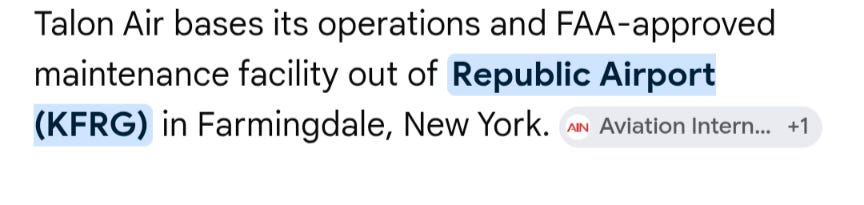
These things are only fun if they’re accurate. We have stricken those three previously credited days on the calendar, meaning that, by all appearances, Ramaswamy has spent at least 80 of a possible 208 days (38 percent) outside of Ohio in the year of our lord 2026.

Today’s dispatch features the return of Elephant in the Room, a Columbus-based Republican operative looking to get his soul right with God.
Here’s how and why Speaker Matt Huffman, who has never provided a solid alibi for April 19, 1995, came to put his thumb on the scale for State Senator Bill Reineke in the presidency race.
Enjoy the show!
The Road to Reineke: How Matt Huffman Hand-Picked His Next Partner in Crime
By The Elephant in the Room
If you still hold onto the quaint, high school civics lesson notion that laws in Ohio are crafted by independent representatives debating open policy on the floor of the Statehouse, I have a bridge over the Scioto River to sell you.
At the corner of E. Broad and High Street, the real government doesn’t operate in the daylight of committee hearings or public floor votes. It operates in dark-paneled steakhouse backrooms, through undisclosed dark money pass-throughs, and inside the hyper-exclusive, closed-door gatherings of the Ohio Senate Republican Caucus.
To understand how Ohio is actually governed, you have to understand how leadership races work. Official floor votes for House Speaker or Senate President are merely theatrical formalities—stamped and sealed long after the actual power dynamic has been decided.
Because Republicans hold supermajorities in both chambers, the real power grab occurs in what is known as the “unofficial caucus vote.” Months before the public ever sees a gavel drop, GOP legislators gather behind locked doors to vote on who will wield absolute control over committee assignments, bill references, campaign cash distribution, and legislative priorities.
In a healthy republic, these leadership battles would be intense contests of ideas, vision, and legislative skill. In Columbus, however, they boil down to three brutal metrics: fundraising capacity, district map manipulation, and raw, unforgiving political capital.
And no one has mastered the machinery of all three better than Matt Huffman. As far as I am aware, Huffman is the only person who has ever successfully made the jump back to the lower chamber to assume the gavel as Speaker of the Ohio House directly after a four year term as the Senate President.
Huffman has built a terrifying reputation across Cap Square as a master chess player who routinely puts his heavy thumb on the scale of leadership races, ensuring that no matter which chamber he happens to be sitting in, he controls the gavel in both.
We saw it in 2023 when he pulled every lever available to guarantee that Representative Derrick Merrin would come down with the gavel—a move designed to give Huffman an easy, pliable partner across the rotunda and pave the runway for his own eventual eight-year reign as Speaker after wrapping up his Senate tenure.
We saw it again when he handed the Senate Presidency off to Rob McColley, who waltzed into the post virtually unopposed after Huffman cleared the field.
And most recently, when Huffman deployed his endless supply of dark money, unprecedented political leverage, and institutional statehouse support to direct traffic behind the scenes and lock up the upcoming Senate leadership race for Senator Bill Reineke. Reineke is set to replace McColley, completing another crucial piece of Huffman’s long-term master plan to maintain total control over both chambers.
To trace how we arrived at this moment, you have to look past the press releases and look at the bodies left along the road—starting with Senator Jerry Cirino.
The Loyal Foot Soldier vs. The Stubborn Maverick

On paper, the contest to replace McColley as the next Senate President should have been a fierce ideological and financial battle between two prominent Republican figures: Senator Bill Reineke of Tiffin and Senator Jerry Cirino of Lake County. But in Huffman’s eyes, the choice was never about qualifications; it was about control.
Bill Reineke has spent his legislative career carving out a niche as Matt Huffman’s ultimate loyal foot soldier. He is the quintessential, uninspired “yes-man”—a legislator whose defining characteristic is an unwavering willingness to carry whatever toxic, unpopular, or heavy legislative baggage Huffman throws at him.
When Huffman was serving as Senate President and needed a reliable puppet to front contentious bills that threatened to alienate key constituencies, Reineke stepped up without hesitation.
During heated caucus meetings where rank-and-file members dared to question executive overreach, Reineke’s support for Huffman remained unconditional. He is predictable, manageable, and entirely dependent on the party apparatus. In short, he was Huffman’s dream candidate.
Then there was Jerry Cirino.
Cirino is an old-school, headstrong, stubborn Italian businessman who entered the legislature after a long career in the private sector. While Cirino certainly possesses his fair share of obvious character flaws and political baggage, he had one major asset that typically guarantees victory in legislative leadership contests: money.
In Ohio politics, each caucus maintains a shared “caucus bank account”—known as the Republican Senate Campaign Committee (RSCC) in the Senate, and the Ohio House Republican Organizational Committee (OHROC) in the House. Members are expected to raise money and write massive checks to these entities, which are then used by caucus leadership to defend vulnerable incumbents and attack Democrats in general elections.
During his time in office, Cirino poured money into the RSCC, contributing more than twice as much as Reineke. By every traditional metric of legislative politics, writing the biggest checks to the caucus war chest earns you the keys to the front door.
Furthermore, Cirino possessed a characteristic that was worrisome for Huffman: right, wrong, or indifferent, he was never afraid to go against the grain. In a legislative body where compliance is prized above all else, Cirino’s independent, often abrasive demeanor was viewed by Huffman not as a sign of leadership, but as an existential threat to his unilateral control over the legislative agenda in Columbus.
Huffman knew that if Cirino won the gavel, the Senate would no longer be a seamless satellite office for Speaker Matt Huffman’s personal legislative vision.
So, Huffman went to work ensuring that Cirino’s financial superiority would be rendered entirely worthless.
The Finance Chair: Real Leverage, False Confidence

 | A guest post by
|